Not Merely
Piano
The piano was invented 134 years ago.
Music was not.
Composition · Piano · History · The Art of Listening
Before studying the piano, it is essential to understand that what we are actually learning is music — and that we are attempting to use the piano to express what we carry within us. All the rules exist to help you use the instrument easily, in service of what you already feel. The piano is a vessel. It is one of the youngest vessels we have. Music has been with us far longer.
Every exercise I write is organised around this principle. Technique is not the destination. The destination is always aesthetic — a sound, a feeling, a world you are working towards. We call this the Aesthetic, and it functions as a lighthouse: it gives direction to every mechanical choice you make at the keyboard. Frustration, in this framework, is not failure. It is, as I tell my students, a condiment to success.
These courses serve two kinds of students — and this distinction matters.
Pursuing piano, composition, or arrangement with serious intent. Seeking a working composer's methodology — not a conservatory syllabus, but a living practice drawn from professional work in game scoring, film, and contemporary classical music.
Not purely music-focused, but drawn to music as civilisation — to its history, its cultural roots, its surprising connections. Why does the Dorian mode evoke fantasy worlds? Why did Beethoven use a Portuguese dance from 1600? These are not digressions. They are the lesson.
The MDA Framework
How I structure every exercise and every session
Originally from game design theory, the MDA framework maps precisely onto musical teaching: the Mechanics (technique) generate Dynamics (musical experience), which realise an Aesthetic (the sound world you are building towards). My teaching begins at the end — with the Aesthetic — and works backwards. What does this need to sound like? Now: how do we get there?
Each exercise is accompanied by a Recette vouée au façonnage — a poetic guide to the Aesthetic the student is working towards.
What follows is an example, written for a student working on finger-force balance.
Qu'on songe à la manière subtile dont se dessinent les sourcils au maquillage,
Où chaque geste trouve sa mesure.
Toute couche se doit d'être dûment formée ;
Laisser l'une inachevée serait péril semblable à fouler un pont non encore parachevé.
Sous la pluie, le vent glacé s'unit au souffle ;
Le pas s'égare dans la rue,
Et les lampes versent une clarté tiède.
Think of the quiet precision with which brows are drawn —
each stroke finding its measure before the next is placed.
Every layer must be properly formed;
to leave one unfinished is a peril not unlike crossing a bridge whose construction is not yet complete.
Beneath the rain, the icy wind joins with the breath;
the step wanders in the street,
and the lamps pour out their mild, still light.
Three Paths
Each course is a complete practice. Each can be taken independently.
I teach composition by taking music apart before reassembling it. Using the Handel Passacaille as a harmonic spine, we trace the same eight bars across blues, medieval modes, Japanese pentatonics, and anime lead sheets. Custom exercises composed for your specific voice.
Explore this CourseNot a lesson — a conversation about sound. Seventy minutes focused on listening, biomechanics (the saisissement), and narrowing the gap between what you imagine and what your hands can produce. Nine years of teaching experience, beginning with the history of music itself.
Explore this CourseThree disciplines woven into one continuous session. From Baroque counterpoint to Joe Hisaishi, from the ancient Greek modes to isekai scoring — for the student whose musical ambitions cross all the artificial boundaries between technique and expression.
Explore this Course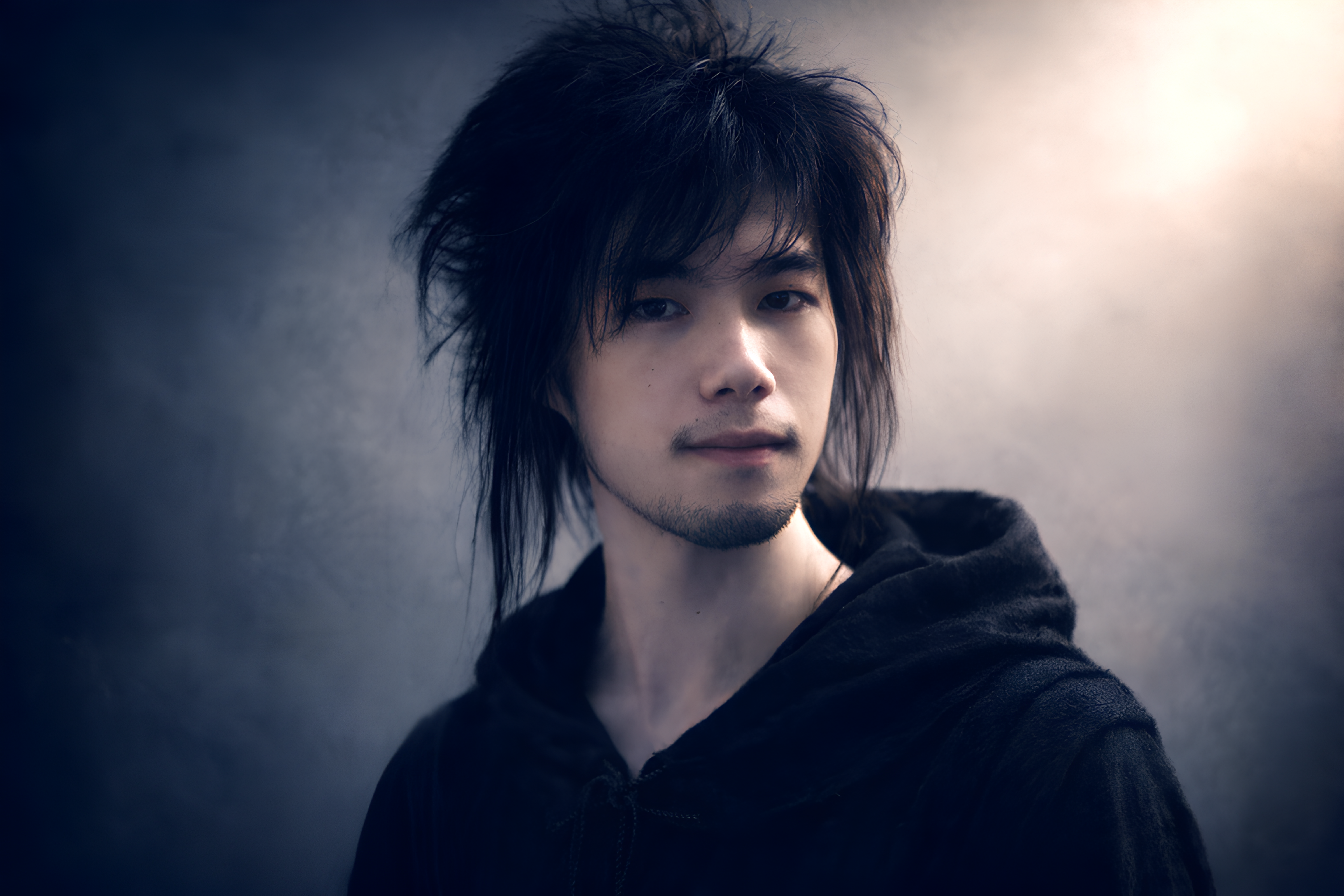
AppaLV
I trained in the French classical tradition — including study in Paris — and have been teaching music for nine years. My professional work as a composer spans game scoring, anime, and contemporary piano music. I live in the Nordic silence of Finland, which shapes everything I make and everything I teach.
My teaching is not a simplified version of what I do professionally. The exercises I give my students are built from the same compositional process I use when writing for games and films. The Handel Passacaille that runs through my arrangement series is not a historical curiosity. It is a tool I use actively, because it is the most versatile harmonic spine I know — it has carried Baroque counterpoint, blues riffs, and medieval modal fragments equally well, for four centuries.
I find mono no aware — the bittersweet beauty of impermanent things — in the same places I find it in daily life: in a Chopin suspension that refuses to resolve, in a Hisaishi melody that is almost too simple, in the Nordic winter light through a window before a lesson begins.
Music as Civilisation
Every session begins somewhere in history. Here are some of the places we go.
The Seven Greek Modes
Ionian, Dorian, Phrygian, Lydian, Mixolydian, Aeolian, Locrian. What we call "major" and "minor" are only their nicknames. These modes shaped medieval chant, Celtic folk music, Renaissance polyphony, and today's anime soundtracks. We work with all of them.
The World of the Minstrel
Troubadours composing in Occitania. Trouvères in northern France. Minstrels crossing the continent. Bardes preserving Celtic law and genealogy in song. For many of these musicians, one or two chords was sufficient — much as in EDM or rap today. Restraint is not poverty. It is a compositional choice.
La Folia
A chord progression from the Iberian peninsula that became, across four centuries, the harmonic backbone of works by Scarlatti, Vivaldi, Handel, Bach, and Beethoven. The modern piano had not yet been invented when this sequence was already old. We learn it in the first lesson.
The Handel Passacaille
Eight bars of harmonic motion from HWV 432. Every exercise in my arrangement series begins here — and departs from here towards blues hexatonics, Japanese pentatonics, and medieval modal fragments. The same eight bars carry all of it. That is the point.
Chopin, Beethoven, Liszt
Not as monuments to admire, but as problems to solve. Why does Chopin write intervals of a tenth? What is Liszt doing in the left hand of La Campanella that makes it physically dangerous? These are technique questions — and they are also composition questions. They are the same question.
From Sakamoto to Hisaishi
Ryūichi Sakamoto and Joe Hisaishi compose in the same harmonic tradition as the music above them. They simply do it with a different emotional vocabulary. My courses trace the line from the Hagiopolitan Octoechos of 692 AD to a Ghibli theme — because the line is unbroken, and it runs directly through your keyboard.
"La vie quotidienne recèle de nombreux récits. Pourtant, l'être humain aime souvent se remplir de bruit, puis s'étonner de ne plus y trouver aucune histoire."— AppaLV · Teaching Newsletter, Medieval · Greek Modes
Daily life is full of stories. And yet we tend to fill ourselves with noise, then wonder why we can no longer find any.
A Single Question to Begin
Every course begins the same way — not with scales or fingering exercises, but with a question about what you want music to mean for you. Get in touch with a brief introduction, and I will reply promptly.